Intermediate Vocabulary
Intermediate Vocabulary covers A2 to B2. The student works out the meaning of a word from the context before being given it, and the different meanings of a word are taught.
Two sentences, one word
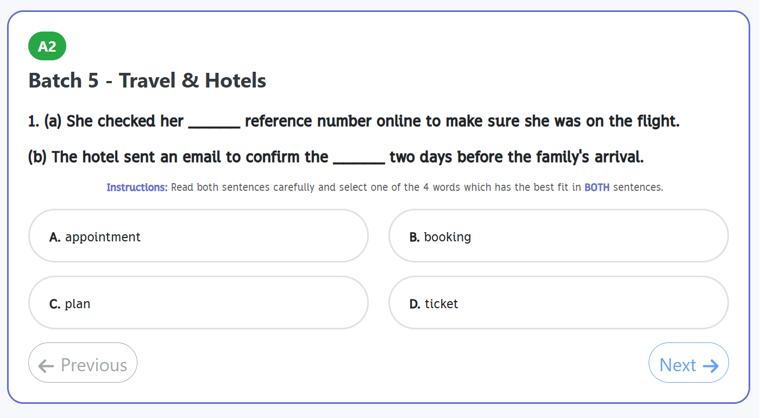
The student sees two sentences, each with a blank, and four words to choose from. There is no definition and no hint. The student chooses the word that best fits both sentences.
The two sentences do different jobs. If the word has two meanings, each sentence shows one of them. In the item for exchange, exchange is a verb in one sentence and a noun in the other. If the word has one meaning, the second sentence rules out the words that are close to it.
The definition comes last
The student works out the meaning from the two sentences, and only then sees the definition. Working out the meaning is what makes the word stick. A definition given first leaves nothing to work out, and the word is much less likely to be remembered.
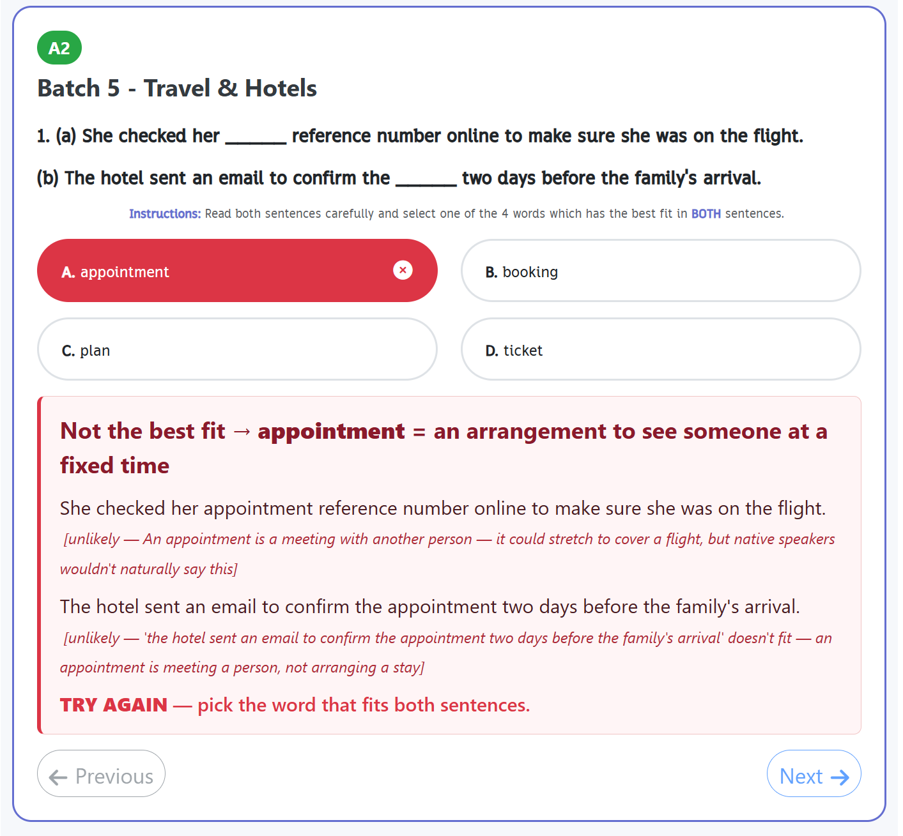
Not the best fit
All four words are real words, and the other three are always close in meaning to the answer. A student who chooses one of the other words sees “Not the best fit”, never “wrong”. The screen gives the meaning of the chosen word, puts the word into both sentences, and shows where it fits and where it does not. The student then tries again.
A student who takes three attempts has learned all four words.
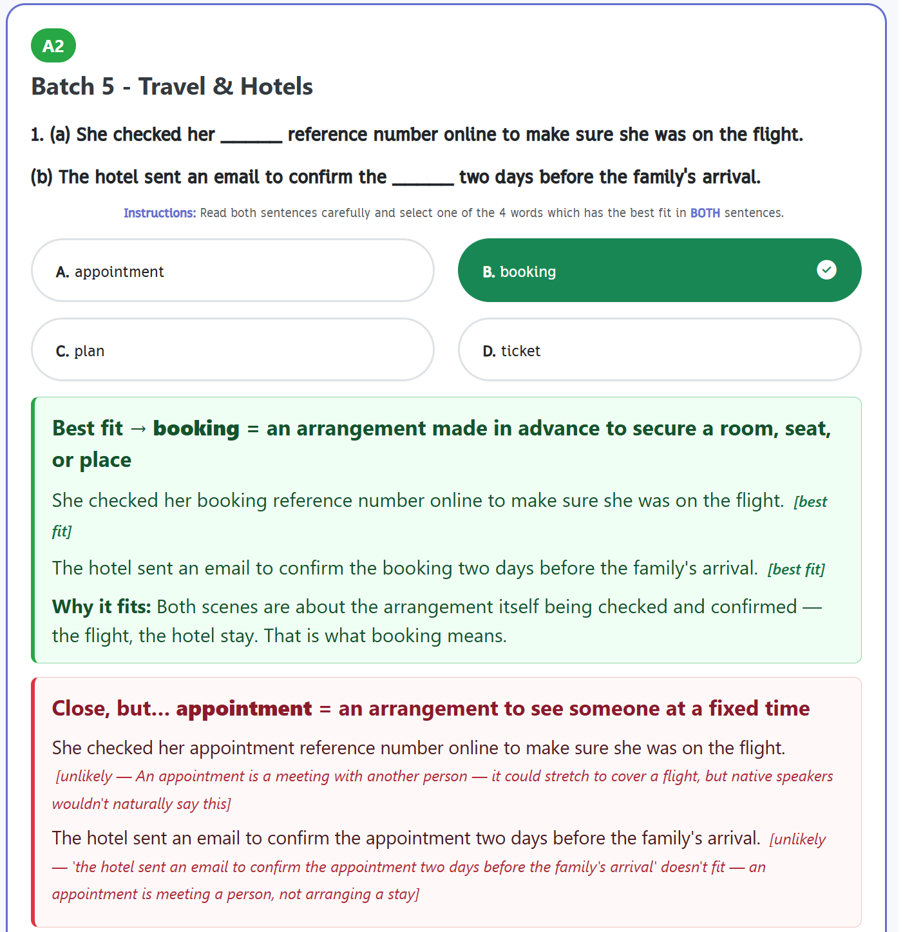
When the student finds the best fit
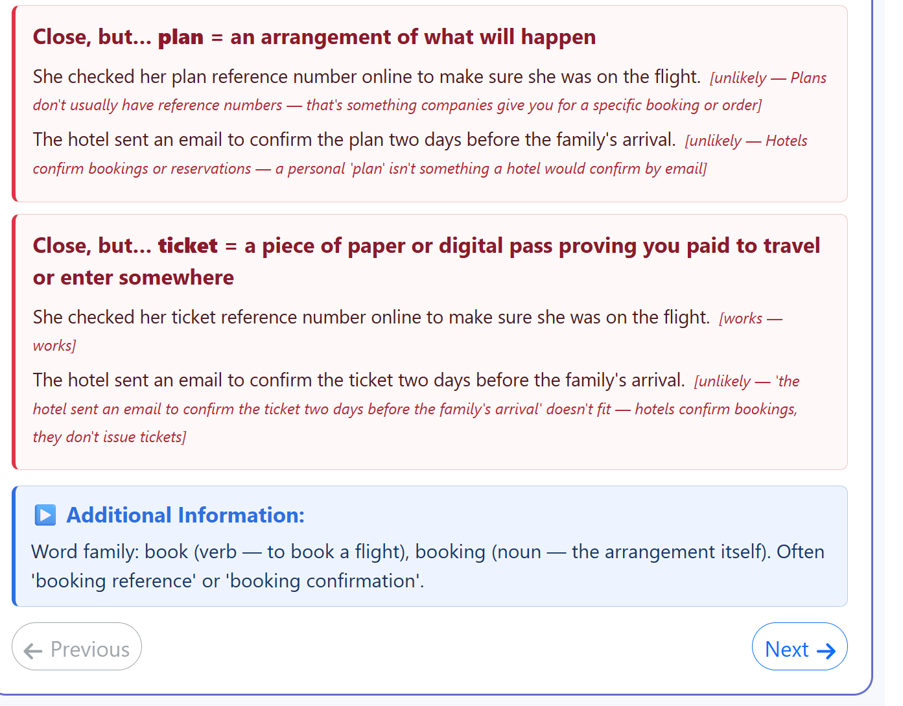
The screen explains why the word fits both sentences. Then it gives each of the other three words with its meaning and the reason it does not fit. Additional Information follows, which can include the word family, usage, register and opposites.
Taught in English
Apart from the four words to choose from, every word in the two sentences has already been taught at a lower level. The student reads English, thinks in English and works out the meaning in English. There is no translation from A2 onwards.
Every item also puts words the student already knows in front of the student again, in a new situation. Revision is built into every sentence.
Three levels that look the same
A2, B1 and B2 use the same screen. What changes is how much the sentences narrow down the answer.
- At A2 the answer is almost forced, and the four words are clearly different from each other.
- At B1 the student has to weigh close words against each other.
- At B2 the sentences are more open again, and the words are more abstract.
Grammar and usage
Choosing the word that best fits each sentence also teaches how the word is used in English, and the grammar of the sentences around it.
For tutors
Students work through Intermediate Vocabulary on their own between lessons. Tutors can see which words a student found hard, and can use the lesson to talk through an item the student argued with.