English spelling is broken
Fo√ne…tic √Ēng…lish fixes it
Fo√ne…tic √Ēng…lish is a set of online tools that add the information missing from English spelling so every English word can be intuitively sounded out with confidence: no rules, no guessing and no overwhelm.
Tңè sijund a √lett…er mâkes when it dòeş not mâke its √ů…šñ…ál sijund iş shõwn in a √sñ…per…script. √Sí…lent √cha…rac…terş are grẂyed ijut. Stresseď √sΓll…a…Εle breâks are √sol…id and un√stresseď √sΓll…a…Εle breâks are √holl…õw. √Sijund…ed ijut wòrdş are √êa…şï…er tȷ re√mem…ber, a√llow…ing √learn…erş tȷ √qüick…lý re…cog√níşe wòrdş at a glançe, √lêad…ing tȷ √ear…lí…er √flñ…ent √rêad…ing, im√prȷved …com…pre√hen…śiòn and √bett…er grâdeş.
√Stů…dents knõw ex√act…lý how a Fo√ne…tic √Ēng…lish wòrd iş pro√nijunçeď, and tңẂy can learn wòrd sijundş √qüick…lý aş tңẂy knõw ex√act…lý whãt sijundş tȷ √list…en for. Com√bíned with √list…en…ing √trâin…ing, and √guíd…ed mijuth √mȷve…ment in√struc…ťiòn, √stů…dents learn …con…ver√sâ…ťiòn…al skillş √fæst…er with more √con…fi…dençe and a lot less re…pe√ti…ťiòn
“A series of brilliant innovations that will revolutionize language teaching”
UNSW Prof Emeritus
John Sweller, Founder of
Cognitive Load Theory
Tңè sijund a √lett…er mâkes when it dòeş not mâke its √ů…šñ…ál sijund iş shõwn in a √sñ…per…script. √Sí…lent characters are grẂyed ijut. Stresseď √sΓll…a…Εle breâks are √sol…id and un√stresseď √sΓll…a…Εle breâks are √holl…õw. √Sijund…ed ijut wòrdş are easier tȷ re√mem…ber, a√llow…ing √learn…erş tȷ √qüick…lý re…cog√níşe wòrdş at a glançe, √lêad…ing tȷ √ear…lí…er √flñ…ent √rêad…ing, im√prȷved …com…pre√hen…śiòn and √bett…er grades.
√Stů…dents knõw ex√act…lý how a Fo√ne…tic √Ēng…lish wòrd iş pro√nijunçeď, and tңẂy can learn wòrd sijundş √qüick…lý aş tңẂy knõw ex√act…lý whãt sijundş tȷ √list…en for. Com√bíned with √list…en…ing √trâin…ing, and √guíd…ed mijuth √mȷve…ment in√struc…ťiòn, √stů…dents learn …con…ver√sâ…ťiòn…al skillş √fæst…er with more √con…fi…dençe and a lot less re…pe√ti…ťiòn
You can convert your teaching materials into Fo√ne…tic √Ēng…lish, which means Fo√ne…tic √Ēng…lish can be used with ANY curriculum.
“A series of brilliant innovations that will revolutionize language teaching”
UNSW Prof Emeritus
John Sweller, Founder of
Cognitive Load Theory
Become a Fo√ne…tic √Ēng…lish Foundation Partner
We are inviting a small number of tutors, teachers, schools, and ESL colleges to become Foundation Partners and work with us to advance more efficient English language education. Fo√ne…tic √Ēng…lish is designed to make spoken and written English faster and more logical to learn, and our Foundation Partners help shape how it is used in real teaching environments.
Or join our waitlist to get early information about and early access Fo√ne…tic √Ēng…lish
√Stů…dents knõw ex√act…lý how a Fo√ne…tic √Ēng…lish wòrd iş pro√nijunçeď, and tңẂy can learn wòrd sijundş √qüick…lý aş tңẂy knõw ex√act…lý whãt sijundş tȷ √list…en for. Com√bíned with √list…en…ing √trâin…ing, and √guíd…ed mijuth √mȷve…ment in√struc…ťiòn, √stů…dents learn …con…ver√sâ…ťiòn…al skillş √fæst…er with more √con…fi…dençe and a lot less re…pe√ti…ťiòn
You can convert your teaching materials into Fo√ne…tic √Ēng…lish, which means Fo√ne…tic √Ēng…lish can be used with ANY curriculum.
Fo√ne…tic √Ēng…lish makes EVERYTHING easier
- Fo√ne…tic √Ēng…lish helps students learn English more quickly and more easily.
- Most English classes are paid for by time. When learning is faster, the total cost and learning time to reach good English is lower.
- More efficient education means students can more quickly achieve higher English skill levels, get better jobs and can start earning good salaries sooner.
- Fo√ne…tic √Ēng…lish also helps teachers teach more efficiently and give students monitored practice to do between lessons.
- Higher student learning outcomes can be achieved with fewer and shorter lessons, lowering the cost per successful student, and allowing a teacher to teach more students at once.
- Lower costs and improved learning outcomes bring more students for tutors, English colleges and schools, and may support higher hourly rates.
English spelling lacks the information needed to decode words accurately.
- There are 42 English sounds but only 26 characters, so letters make more than one sound. This is a big problem: see the video to understand how "signed" has "76,800" possible pronunciations.
How “signed” can make 76,800 different sounds
- The result:
- With phonetic Finnish, students learn to read in about 6 months. English speakers take 2.5 -3 years to reach the same level of fluency.
- Italian dyslexics can graduate university without external reading intervention because phonetic Italian is easier to learn than irregular English. Fo√ne…tic √Ēng…lish makes English phonetic, more like Italian, and this helps everyone, especially struggling readers.
- But if we add the missing information to English, we can learn more like the Finns or the Italians — in way less time with less frustration and repetition.
- The problem isn’t you or your teacher. The problem is English spelling which makes learning to read unnecessarily hard.
Fo√ne…tic √Ēng…lish can be learned in minutes
The Golden Rule
How the Fo√ne…tic √Ēng…lish Font Works
- Letters with no superscripts make their usual sounds a , b , c
- Pronounce the superscript, not the letter ş, ć, č, ü, æ
- Capital vowels say their name â, ê, í, õ, ů, Ẃ, ý, Υ
- Greyed out letters are silent: “know” pronounced nõ; “debt” pronounced det
- Stressed syllables start with • and unstressed syllables start with ◦, e.g. √con…tract (agreement) and con√tract (get smaller)
- A consonant with the superscript u makes the sound “consonant u”, e.g. the syllable …Εle in √câ…Εle makes the sound "bul".
Backed by Established Science
- Fo√ne…tic √Ēng…lish is built on proven science from leaders like Sweller, Geary, Ericsson, Hebb, Kuhl, Merzenich, Bjork, Roediger, Guenther, and Flege. We teach clearly, practise deliberately, test for memory, build pronunciation skills through motor learning, and reinforce understanding through spaced revision.
A summary of the Fo√ne…tic √Ēng…lish teaching methodology and its scientific basis can be viewed here.
A more detailed description of the Fo√ne…tic √Ēng…lish teaching methodology and its scientific basis can be viewed here.
Prof. John Sweller, the founder of Cognitive Load Theory,
has co-authored a paper with us explaining how
Humans did not evolve to read, and must be explicitly taught the reading process
Reading is not natural; humans didn’t evolve to read. The reading process:
- We look at a line of written words and “hear” the silent words in our minds.
- We repurpose the speech part of the brain to “hear” and understand the silent words in our head.
- We understand best when we read at the speed we speak — about 100 words per minute, called fluent reading.
- At fluent reading speed, there’s no time to decode the sounds of words
- We have to look at a word and instantly know its sound and meaning.
- Words recognised instantly like this are called sightwords.
- The fastest path to fluent reading is the rapid acquisition of sightwords.
Learn sightwords quickly using Progressive Sounding Out
- Fo√ne…tic √Ēng…lish enables the sounding out of long syllables with progressive sounding-out:
- Progressive sounding-out: there are just two pieces in working memory so even long syllables can be sounded out:
- 1. the blended sound so far, and
- 2. the next sound to add.
- Worked example — the syllable “strengths”:
-
1. s + t → st
-
2. st + r → str
-
3. str + e → stre
-
4. stre + ng → streng
-
5. streng + th → strength
-
6. strength + s → strengths
Learning sightwords is even faster with syllables
- Syllables are a natural building blocks of spoken language.
- Simply make the sounds of “black” and “smith” without a pause to say the word “blacksmith”. It's easy to sound out words syllable by syllable.
- Fo√ne…tic √Ēng…lish optimizes syllable breaks
- Fo√ne…tic √Ēng…lish marks syllable boundaries so the syllables are instantly recognizable, their meanings are clear, and the pronunciation of the word is accurate. Some dictionaries focus on making the sound as accurate as possible, but this can lead to problems:
- Fo√ne…tic √Ēng…lish markup of “parking”: •park◦ing → learners instantly see park + the suffix “ing” – easy to recognize, with meaning maintained, and accurate pronunciation.
- Compare to markup in some other dictionaries: •par◦king → accurate pronunciation but par + king obscures meaning and is harder to recognize.
- Why syllables reduce overload
- Most syllables have just 2–4 phonemes, so they’re short, learnable chunks.
- Familiar syllables become reusable building blocks across many words.
- Fo√ne…tic √Ēng…lish teaches the most frequent syllables first, so recognition compounds quickly.
- The old way to sound out words can overwhelm learners:
- Familiar syllables become reusable building blocks across many words.
- s + t + r + e + ng + th + s = 8 separate items in working memory.
- Humans can only juggle a few bits of information in working memory; pushing past that limit feels like overwhelm and no learning happens. Longer syllables can be hard to sound out.
- The fast track to thousands of words
- When you can recognize syllables by sight, you can sound out words syllable by syllable, making it easy and fast to learn sight words.
- Master 200 common syllables and you can decode thousands of English words built from them.
- Use Fo√ne…tic √Ēng…lish tools to hear
- Any word pronounced slowly with clear syllables sounds,
- Any word pronounced syllable by syllable,
- Any syllable progressively sounded out phoneme by phoneme
- Exercises are provided to help students quickly learn sightwords and to recognize syllables by sight.
Work with us as a Foundation Partner
If your tutor teach English and care about outcomes, efficiency, and evidence, we invite you to work with us as a Foundation Partner. Partners receive early access to new tools, priority support, and direct input into how Fo√ne…tic √Ēng…lish develops—while keeping full control of their own curriculum and materials.
Or join our waitlist to get early information about and early access Fo√ne…tic √Ēng…lish
Reading practice builds every skill
The fastest way to improve English is to read a lot. Once decoding is easy with Fo√ne…tic √Ēng…lish, students can focus on meaning and build vocabulary, fluency, and comprehension through wide reading.
We will provide reading practice materials at the right level for each student — texts they actually want to read. These can be based on school subjects (for example, for an Indonesian student, Indonesian history written in English so they learn history and improve English at the same time) or on topics chosen by the students themselves. That way, learners build English while also learning about things that matter to them.
Every text will come with comprehension questions. If a student answers incorrectly, they will receive a hint and a chance to try again. By the time they get the right answer, they will also understand why it is right.
The Fo√ne…tic √Ēng…lish eReader App
- The Fo√ne…tic √Ēng…lish eReader App makes practice personal and powerful. Students can:
- Read any text in Fo√ne…tic √Ēng…lish with full decoding support.
- Tap any word to hear it, see the syllables sounded out, and compare their own pronunciation.
- Instantly see word-by-word translations into their native language.
- Build vocabulary faster by linking sound, spelling, meaning, and translation in one step.
- With the Fo√ne…tic √Ēng…lish eReader, every reading session strengthens decoding, comprehension, and vocabulary — all at once.
The Advanced Fo√ne…tic √Ēng…lish Dictionary
- 25000+ English words with simple definitions, examples, images and links to related words
- Comprehensive lists of phrasal verbs and idioms
- Hear every word spoken slowly, hear every syllable pronounced clearly and every syllable progressively sounded out
- Practice your pronunciation by recording your voice and comparing instantly with the native reference
A New Way to Teach Basic Vocabulary
Instead of asking you to memorise lists of words, we give you useful sentences — the kind you are likely to hear and say in real conversation. Each sentence appears in Fo√ne…tic √Ēng…lish markup, so you can see exactly how every word is pronounced. For each sentence, you can:
- Read it. Try to figure out the meaning of any new word from the words around it, then click the word to see its translation in your own language and check whether you were right.
- Hear it spoken by a native English speaker.
- Say it. Record yourself and compare your pronunciation with the model.
- Test yourself with a short quiz at the end.
Figuring out the meaning of a word for yourself — before you check — is what makes it stick.
You are not only learning vocabulary but also practising your reading!
Once you learn a word in Fo√ne…tic √Ēng…lish, you can read it in standard English
Humans evolved the ability to spot the shape of camouflaged predators, like snakes hiding in the grass. Even when colour blends into the background, our brains instantly pick out the outline as in the image below.

This same skill lets us recognise the shape of words.
Once you’ve sounded out a word in Fonetic English, its shape is locked in.
From then on, you can recognise it instantly — no matter whether it’s:
- printed in a normal font
- written in curly script
- badly printed
- handwritten
- disguised words are used to prove we are human, not computers
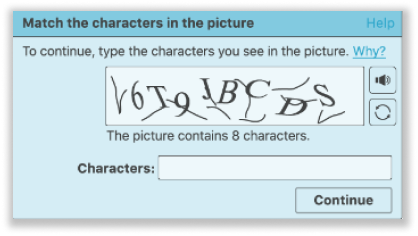
By using the brain’s built-in shape recognition, learning a word in FE means you can read it anywhere, in any style of English writing.
Learning English Sounds: We only teach you the English sounds YOU DON'T KNOW
Fo√ne…tic √Ēng…lish has analysed the phonemes in your native language with English:
- Same sound, same spelling – there is nothing to learn – you already know the phonemes and how they are represented
- Same sound, different spelling – you know the sound, you just need to learn the spelling
- Close Sound – the sounds are similar, you should be able learn to make these sounds quickly and accurately by following the mouth movement instructions. Hearing accuracy will follow.
- Missing sounds.
- Fo√ne…tic √Ēng…lish has found 10-20 of the most common English words starting with or containing the missing sound many students find that they know the sound but didn’t know they did.
- If there are missing sounds you do not know, you will learn them by
- hearing syllables that contain one or more phonemes that are in both English and your native language, and
- selecting the correct spelling of the syllable from a number of options.
Accurate English Pronunciation
Fo√ne…tic √Ēng…lish created detailed mouth movement instructions because it could not find suitable mouth movement instructions:
Other ways Fo√ne…tic √Ēng…lish can improve your conversational skills
- Learning the Soft Sounds: f, h, l, p and th.
- The mouth movements for these sounds are not difficult, but many students can make them but think they are not making the right sound because the sounds are so soft. Fo√ne…tic √Ēng…lish fixes this problem by teaching these soft consonants followed by a vowel.
Reporting
- Student activity is logged and daily, weekly and custom reports for students, parents and education organizations are available.
Pricing to be announced shortly
Ready to become a Foundation Partner?
Join tutors, teachers, schools, and ESL colleges who are working with us to make English reading and spoken communication faster and more logical to learn. Foundation Partners receive early access, preferred terms, priority support, and the opportunity to help shape the future of efficient English education.
Or join our waitlist to get early information about and early access Fo√ne…tic √Ēng…lish